root@sosoka:~$ cat projects/ai-3d-printer-factory.log
AI 3D Printer Object Design Factory
Multi-agent AI system for generating custom 3D-printable objects without CAD experience. Uses Python macros as version-controlled specifications to overcome LLM context limitations.
Specs
- type
- automation
- cad_software
- FreeCAD
- ai_framework
- Claude Code / Multi-Agent
- output_format
- Python Macros → STL
- use_case
- Custom 3D printed mounts and hardware
- --ai
- --3d printing
- --freecad
- --python
- --multi-agent
- --automation
Gallery
AI 3D Printer Object Design Factory
A multi-agent AI system for generating custom 3D-printable objects without requiring CAD expertise. This project demonstrates how to overcome LLM context limitations through specialized agent roles and Python code as a 3D design specification language.
The Problem
After acquiring my first 3D printer, I quickly exhausted the pre-made designs available on sites like Printables.com. I needed custom objects—specifically, under-desk mounting hardware for audio equipment—but had zero CAD modeling experience. Traditional CAD learning curves weren’t practical, so I turned to AI agents instead.
The Solution: Multi-Agent Factory
Rather than building a single AI model, I created a team of specialized agents:
Mechanical Designer
- Decomposes the design request into detailed specifications
- Validates dimensions and physical constraints
- Reviews generated models and provides feedback
- Approves final designs for manufacturing
CAD Spec Implementer
- Translates specifications into executable code
- Writes FreeCAD Python macros
- Generates 3D models based on designer input
- Iterates based on feedback
The Handoff Pattern
Both agents operate in context isolation using an llm_memory directory pattern:
- Mechanical Designer writes detailed specs as markdown
- CAD Spec Implementer reads specs, writes Python macros
- Designer executes macros via FreeCAD MCP to render objects
- Designer provides feedback or approves
- Both agents maintain focused contexts without cluttering
Python Macros as “3D-Model-as-Code”
The breakthrough insight was using FreeCAD Python macros as specifications. Instead of trying to describe complex 3D geometry through tokens, agents write executable Python code:
# Macro specification: Under-desk mountbase_width = 120base_depth = 50mounting_holes = [ {"x": 20, "y": 15, "diameter": 8}, {"x": 100, "y": 15, "diameter": 8},]Key Advantages
Version Control for 3D Models
- Every design iteration is a git commit
- Compare designs across versions
- Rollback to known-good specifications
- Document design decisions
Context Preservation
- Python code is far more token-efficient than mesh descriptions
- Agents stay in context for longer working sessions
- No need to describe complex geometry in natural language
Reusable Components
- Common patterns extracted into functions
- Parametric designs that scale with dimensions
- Component libraries for mechanical hardware
Dynamic Generation
- Ventilation patterns that adapt to component size
- Mounting holes that scale with equipment
- Assembly instructions derived from code
The Workflow
User Request (custom 3D part) ↓Mechanical Designer - Writes detailed specs and constraints - Saves to llm_memory/design-spec.md ↓CAD Spec Implementer - Reads specification - Writes Python macro - Returns macro code ↓Mechanical Designer - Executes macro in FreeCAD via MCP - Reviews rendered object - Gets visual/textual feedback ↓Feedback Loop - Approves → Export to STL - Requests changes → Back to ImplementerResults in Practice
Using this workflow, I successfully generated:
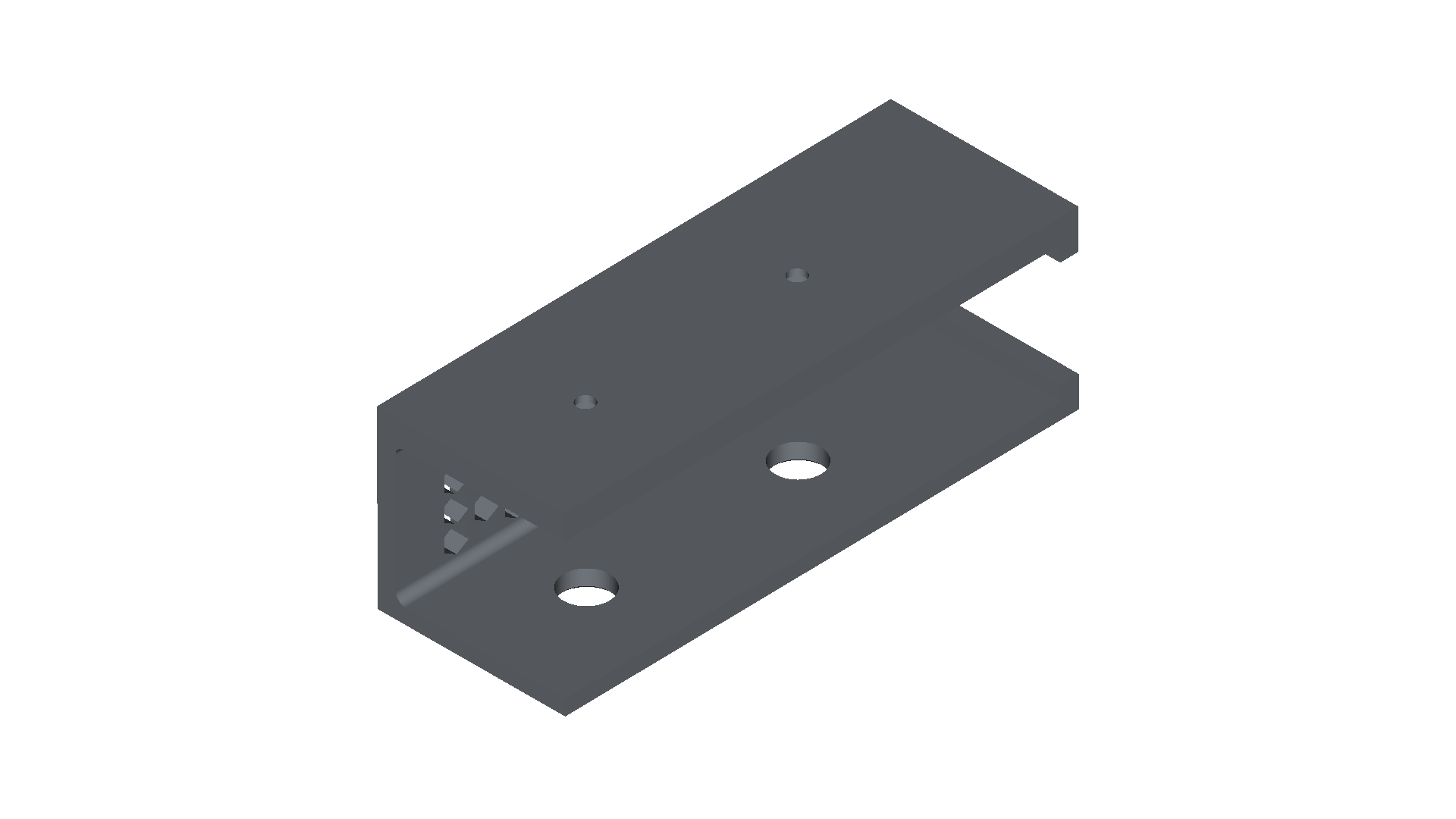
- Under-desk mount brackets for Schiit Magnius/Modius audio equipment
- Custom ventilation patterns with hexagonal holes for thermal management
- Optimized tooling holes for easier installation
- Parametric designs that adapt to different equipment sizes
All within hours, without prior CAD experience.
Why This Approach Works
Overcomes Context Limitations
Initial attempts with FreeCAD MCP alone resulted in context exhaustion after 3-4 turns. The issue: MCP responses describing rendered objects are massive (base64-encoded meshes). By eliminating direct MCP in the generation loop, agents can work much longer without context collapse.
Preserves Specialization
When agents maintain focused contexts, they excel at their domain:
- Mechanical designers think about form, fit, function
- Python developers think about clean, maintainable code
- Neither context is cluttered with the other’s domain noise
Enables Iteration
Version control on Python specs means:
- Try experiments without losing previous work
- Compare design approaches objectively
- Learn why certain patterns work better
- Build a library of proven components
Technical Architecture
- CAD Software: FreeCAD
- Macro Language: Python 3
- Output Format: STL (3D printable)
- Integration: freecad-mcp for rendering validation
- Context Management: llm_memory directory pattern
- AI Models: Claude Code with specialized agents
Future Directions
The current workflow is functional but with room for optimization:
- MCP Integration: Explore better context management with compressed object representations
- Model Libraries: Build open-source repository of parametric designs
- Automated Testing: Generate test prints to validate designs before production
- Assembly Instructions: Auto-generate manufacturing guides from Python specs
Lessons Learned
- Code is a better design language than text - For spatial problems, executable specifications beat descriptions
- Specialization matters - Agents with focused contexts outperform generalist agents
- Handoff patterns scale - Using directories for agent handoffs beats long-context conversations
- Version control for hardware - Git workflows apply to 3D models surprisingly well
- Manufacturing margins - Always include tolerance specifications in macros
Key Takeaway
This project demonstrates that AI agents don’t need to be monolithic. By decomposing the problem into specialized roles and using code as the medium of exchange between agents, you can build sophisticated systems that overcome individual model limitations.
The result: custom manufacturing without expertise, version-controlled hardware design, and a scalable pattern for AI-driven creation workflows.